The Twin-Stick Shooter Is Not Dead—It Escaped Its Label
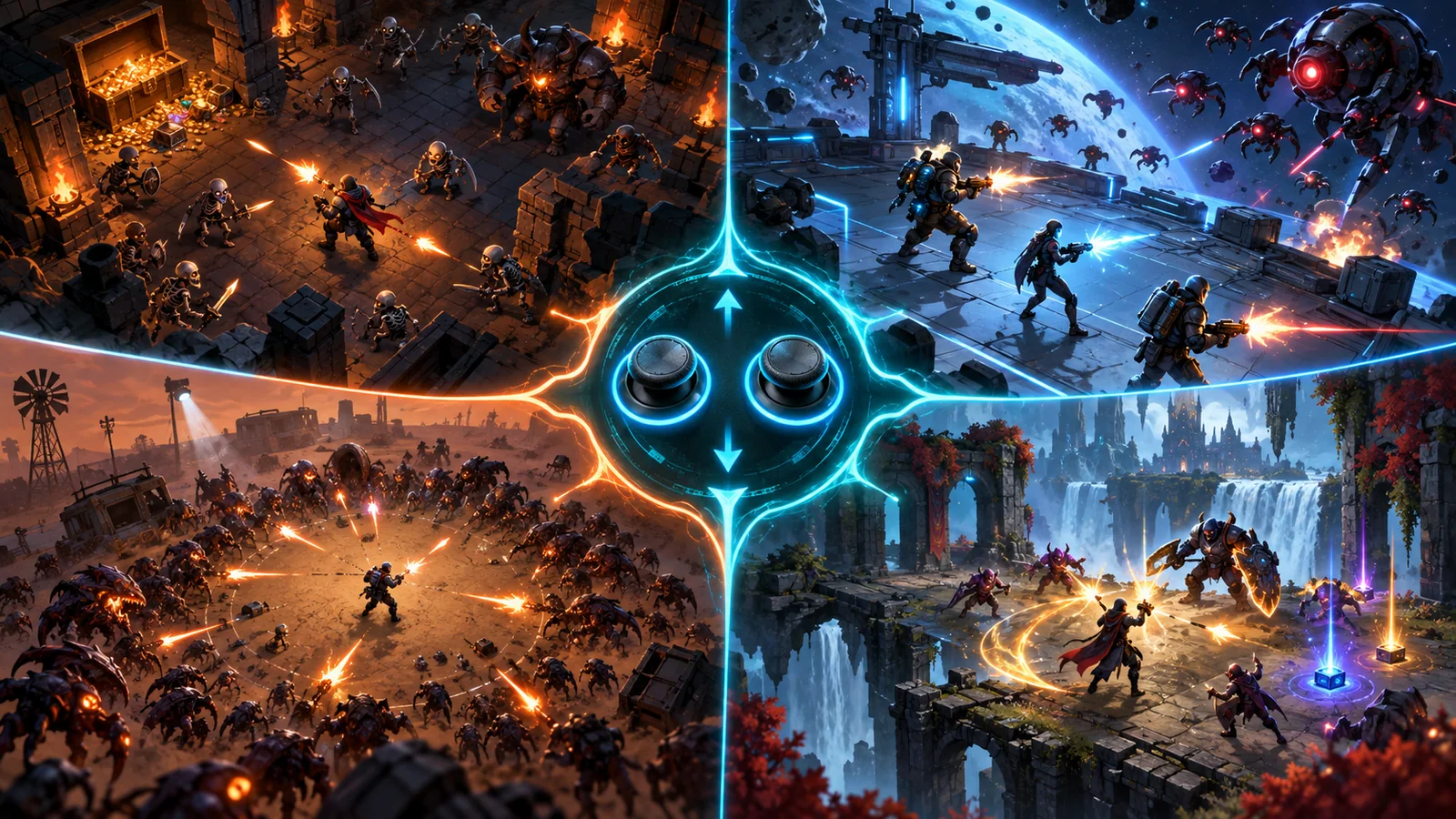
Image: Official product imagery used for editorial identification
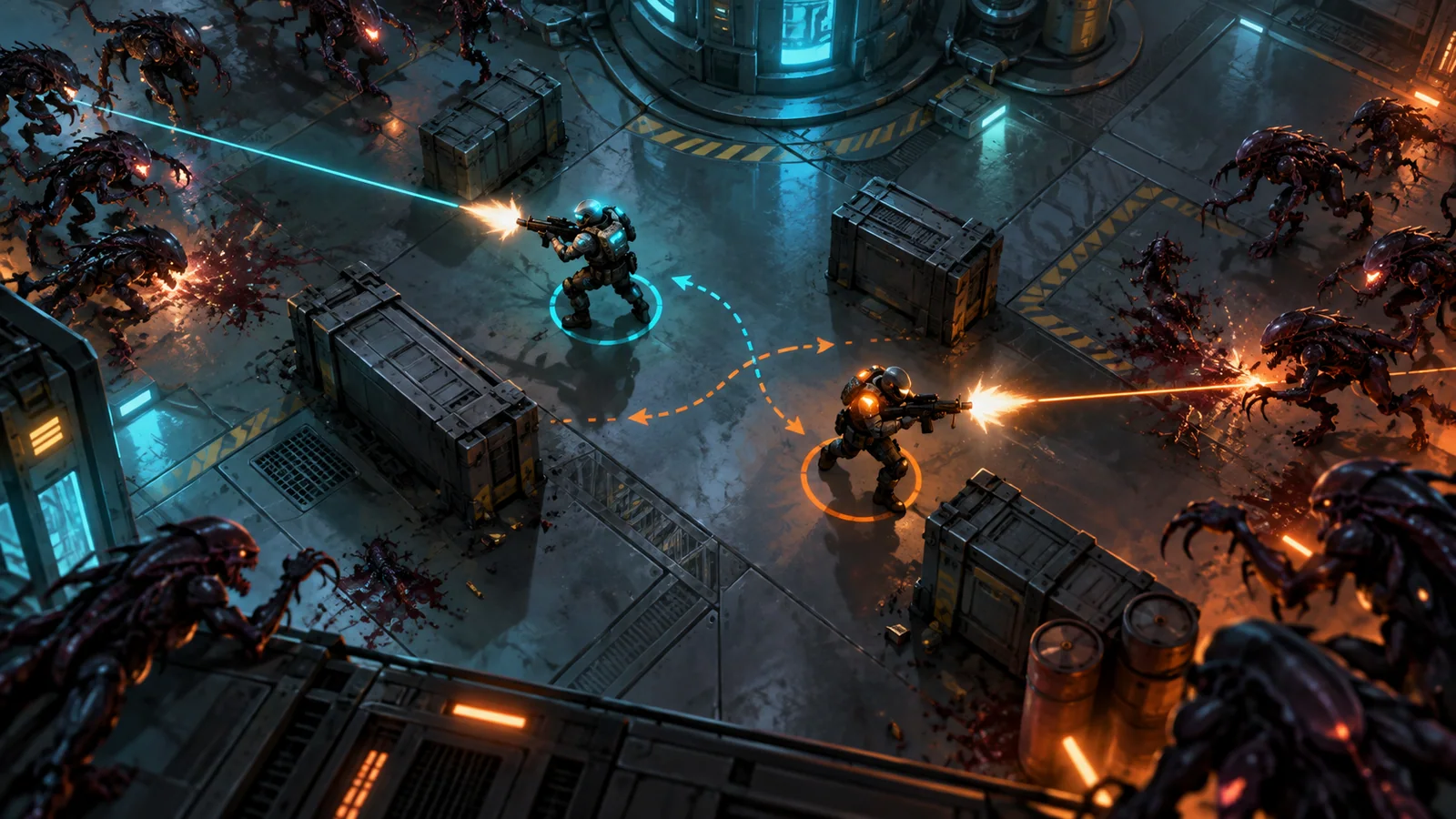
Search a modern storefront for “twin-stick shooter” and the category can look smaller than it once did. Search for the mechanic—move in one direction, aim in another—and it is everywhere.
The genre did not disappear. Its control grammar escaped into other labels.
The original promise
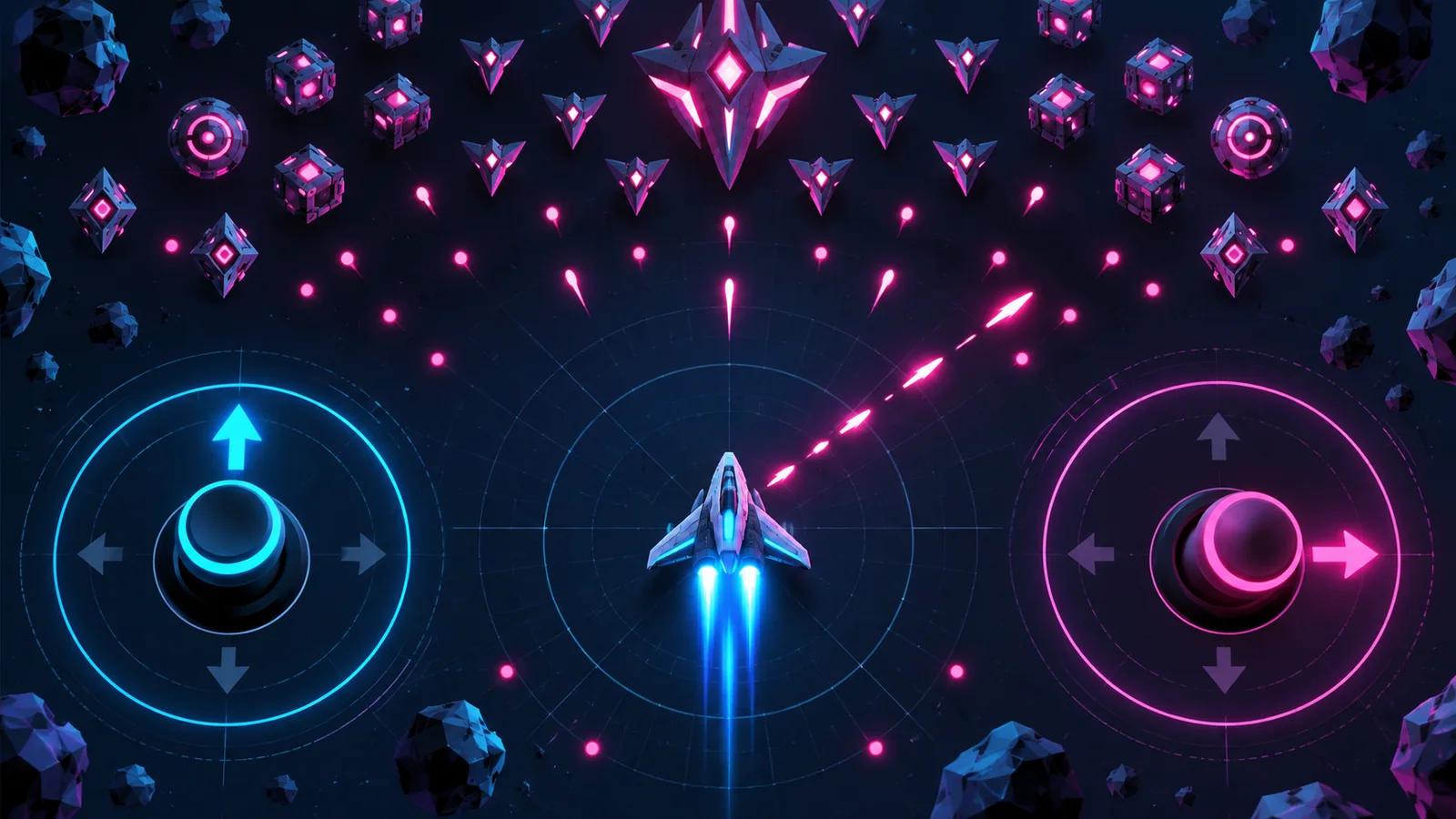
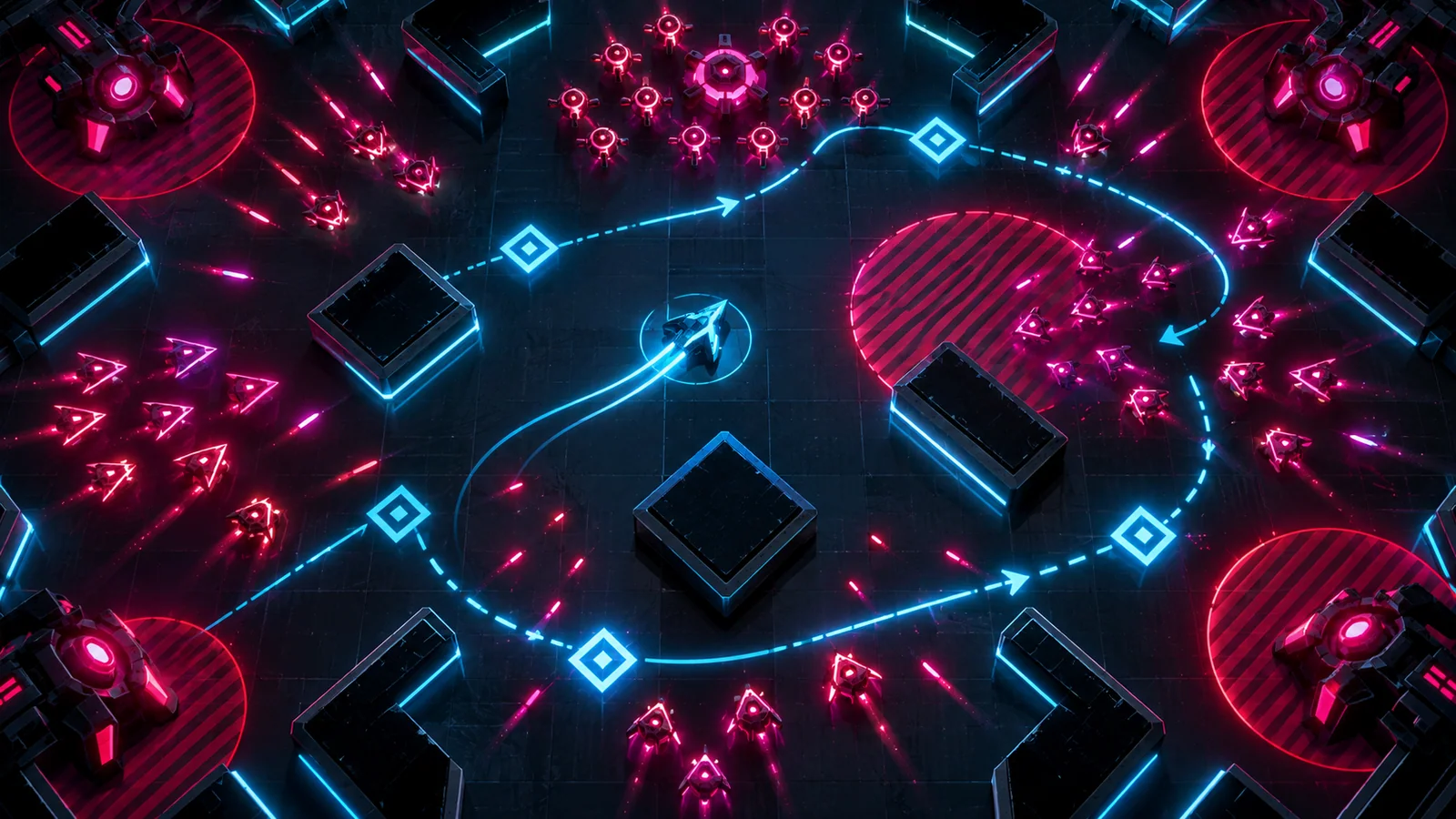
Robotron: 2084 made the distinction physical: one control moved the character, another fired independently. That separation turned retreat into attack. A player could create distance without surrendering aim.
Later games translated the same idea to dual analog sticks and mouse-plus-keyboard controls. The inputs became ordinary enough that storefronts began describing the surrounding progression instead: roguelite, co-op shooter, action RPG, bullet hell, or extraction game.
Three visible descendants
Nex Machina on Steam presents a focused arcade structure with scoring, worlds, destruction, and rescue objectives. It is the recognizable pure line.
Enter the Gungeon on Steam wraps independent movement and aiming inside rooms, dodge rolls, randomized weapons, and run progression. Discovery language emphasizes the roguelike structure.
Helldivers on Steam combines multidirectional shooting with squad objectives and friendly fire. The control method serves cooperation and deliberate chaos.
Why the label matters less now
Genres help people predict the repeated decision. “Twin-stick” describes how the player controls space; it does not say whether the session lasts three minutes or three hours, whether death resets a run, or whether four players share the screen.
That makes the term useful for design analysis and incomplete for shopping. The modern question is not “is this officially a twin-stick shooter?” It is “what does independent aim allow this game to ask of me?”
The survival test
A genre is alive when designers keep borrowing its strongest idea. By that measure, twin-stick shooting is thriving—even when the store page leads with another name.
This analysis is maintained for https://twinstickshooter.com/. Product names and official media belong to their respective owners.
twin-stick shootersgenre historyroguelitesindie gamesgame design