The Binding of Isaac: Rebirth and the Roguelite That Refused to Die
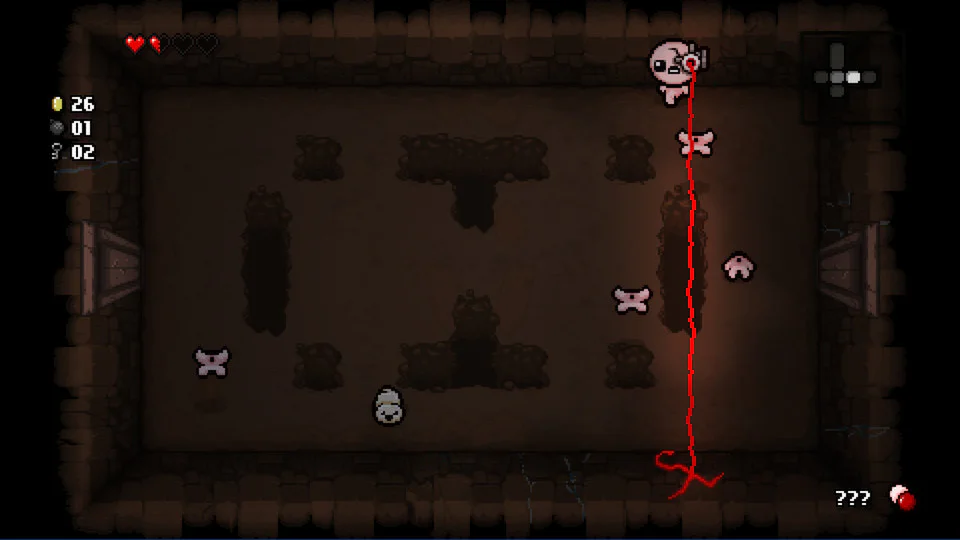
Image: Official gameplay screenshot — Nicalis and Edmund McMillen
Some games are polished into existence. The Binding of Isaac was closer to an accident that got out of hand. What started as a scrappy Flash experiment in 2011 became, three years later, one of the most influential roguelites ever made, and along the way it quietly smuggled twin-stick shooting into the guts of a genre obsessed with permanence and loss.
Development: from Flash game jam to a Nicalis rebuild
Edmund McMillen and Florian Himsl built the original Binding of Isaac in Adobe Flash following the success of Super Meat Boy. It was a side project, a quick jam-style release that McMillen half expected to flop. Instead it found an audience on Steam almost immediately, spreading through streamers who loved its grim humor and its bottomless bag of items.
The problem was the technology. Flash strained under everything the game wanted to do, and it capped how far the design could grow. When McMillen went to expand it, he hit a wall. So rather than patch a dying platform, he chose to rebuild the whole thing. On the Nicalis blog he was blunt about his motives: “im doing this because i think the art is tired and im sick of looking at it. I think a fresh coat of paint is needed,” calling it “kinda appropriate/funny to do a damake for the remake.” (Source: Nicalis blog.)
Nicalis handled the recreation, a studio McMillen said he was “close to and that i trust with my IP.” The 2014 result, The Binding of Isaac: Rebirth, traded Flash for a faster native engine, a full 16-bit visual overhaul, proper controller support, local co-op, and a mountain of restored content that Flash had never allowed. It ran, in McMillen’s words, “perfect/fast finally.”
The twin-stick angle: tears in every direction
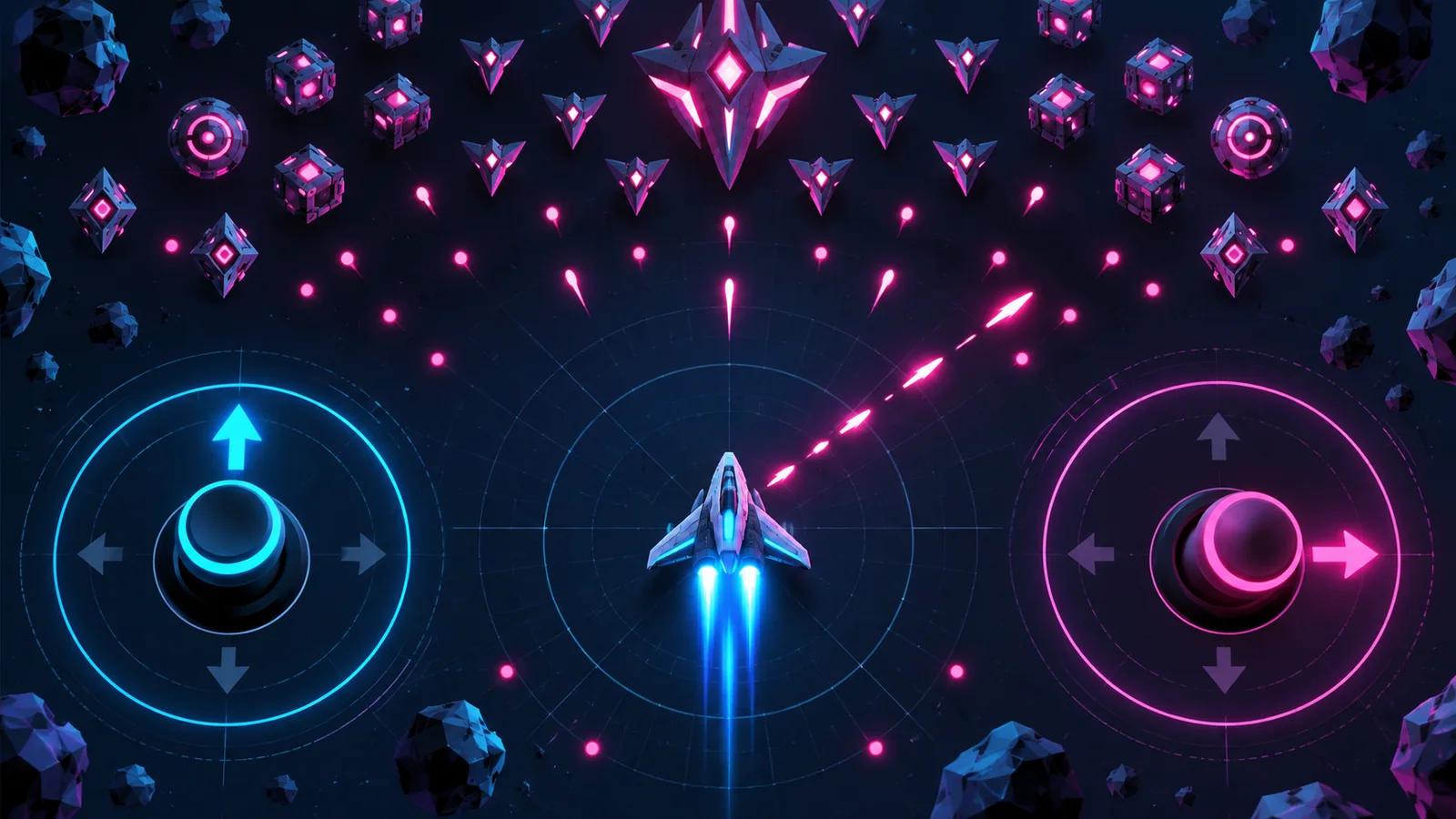
Here is where the honesty matters. Rebirth is a twin-stick shooter in spirit and in mechanics, though not always in the literal hardware sense. You move Isaac with one set of inputs and fire his tears with another. On a gamepad that is a clean left-stick, right-stick arrangement. On a keyboard, the default is WASD to move and the arrow keys to shoot, which is a loose, four-direction take on the twin-stick idea rather than the free 360-degree aim of a purist shooter.
It still qualifies, and comfortably so. The core loop is decoupled movement and aiming under constant fire, the exact tension that defines the genre. You are strafing, kiting, and threading shots around enemy patterns while never stopping. Rebirth simply wraps that combat inside dungeon rooms and a roguelike progression, which is what makes it feel different from a pure arena shooter like the ones on our Top 10 Twin-Stick Shooters of All Time.
Why it matters: shooting meets the endless run
Rebirth’s real trick was fusing two things that had rarely shared a room. On one side, twin-stick combat with its moment-to-moment dodging and firing. On the other, the roguelike structure of procedural floors, permadeath, and item builds that reset every time you die.
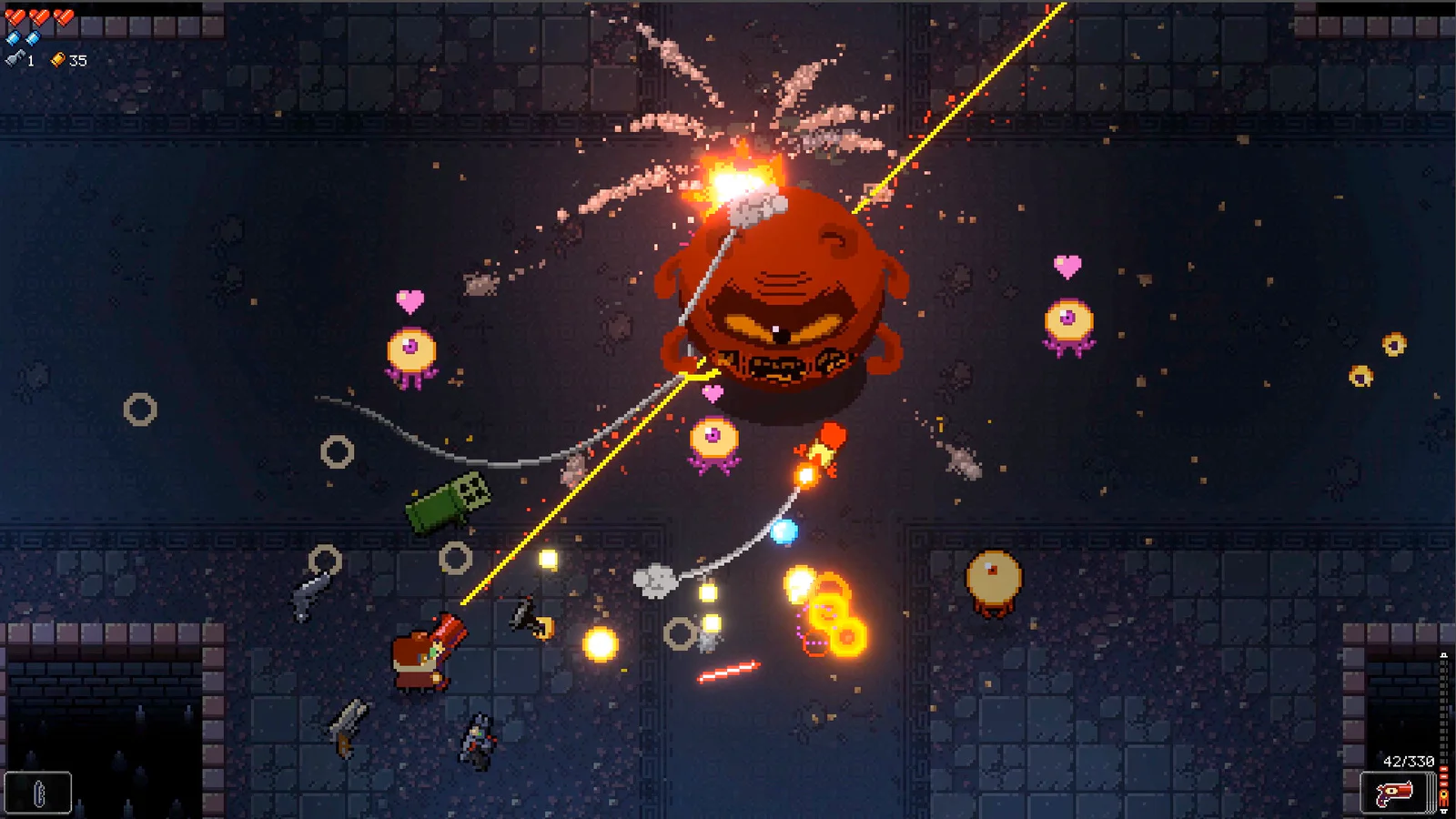
That combination turned each run into a fresh negotiation. You are not just aiming well, you are gambling on what the next item does to your tears, your body, and the rules of the game itself. Plenty of later hits chase the same high, and if you love this design you will feel right at home with Enter the Gungeon, which pushed the bullet-hell side of the equation even harder. Isaac got there first at scale.
How it feels: synergies, variety, and the joy of not knowing
The magic of Rebirth lives in its item synergies. Individually, most pickups do something modest: your tears get bigger, or bounce, or poison. Stack a few together and the game breaks in your favor in ways the designers cannot possibly have hand-tuned for every case. One run you are lobbing homing lasers, the next you are a machine gun of tiny flies. That emergent chaos is the whole point.
Run variety comes from the sheer size of the pool. Hundreds of items, dozens of characters and unlocks, secret rooms, deals with the devil, and hidden bosses mean two sessions almost never rhyme. The difficulty is genuinely punishing early, then bends as you unlock more of the machine, which keeps the “one more run” pull unusually strong. And the secrets run deep enough that the community spent years excavating them.
Legacy and expansions: a game that kept mutating
Rebirth never really stopped. Nicalis and McMillen kept bolting on major expansions: Afterbirth in 2015, Afterbirth+ in 2017 (which added full modding support), Repentance in 2021, and Repentance+ in 2024, which finally delivered the long-requested online multiplayer. Each pass added items, floors, characters, and endings, ballooning an already enormous game into something close to a genre unto itself. By July 2015, Rebirth and the original had already sold more than five million copies combined, and its DNA is visible across a decade of roguelites that followed.
Lesser-known but documented: Nintendo said no first
Here is a fact that surprises even longtime fans. The game very nearly never reached Nintendo hardware. Nintendo initially declined to allow The Binding of Isaac on the Wii U and 3DS, citing concerns over its religious content and imagery. According to Wikipedia’s account of the game’s history, the decision was reversed only after three senior Nintendo employees personally championed the title internally, clearing the path for the later 3DS and Switch versions. (Source: The Binding of Isaac: Rebirth, Wikipedia.) For a game whose whole premise riffs on a Bible story, being blocked and then rescued by the platform holder is a fittingly strange chapter.
FAQ
Is The Binding of Isaac: Rebirth actually a twin-stick shooter? Mechanically, yes: you move and shoot independently under constant fire. On a controller it plays as a true twin-stick; on keyboard the default aiming is four-directional, so it is a looser twin-stick than a 360-degree arena shooter, but the core loop is unmistakably the same.
Do I need the original Flash game to play Rebirth? No. Rebirth is a complete standalone remake with more content than the original. The Flash version is largely a historical curiosity now.
Which version should I buy today? The Repentance or Repentance+ package, since it bundles the base Rebirth game with every major expansion, giving you the largest and most refined version of the whole thing.
Sources
- The Binding of Isaac: Rebirth, Wikipedia
- Edmund McMillen, Wikipedia
- Binding of Isaac console remake details, Nicalis blog
- As The Binding of Isaac winds down, Edmund McMillen looks back, Game Developer
binding-of-isaacedmund-mcmillenroguelitenicalis