Enter the Gungeon: How Dodge Roll Turned Bullets Into a Playground
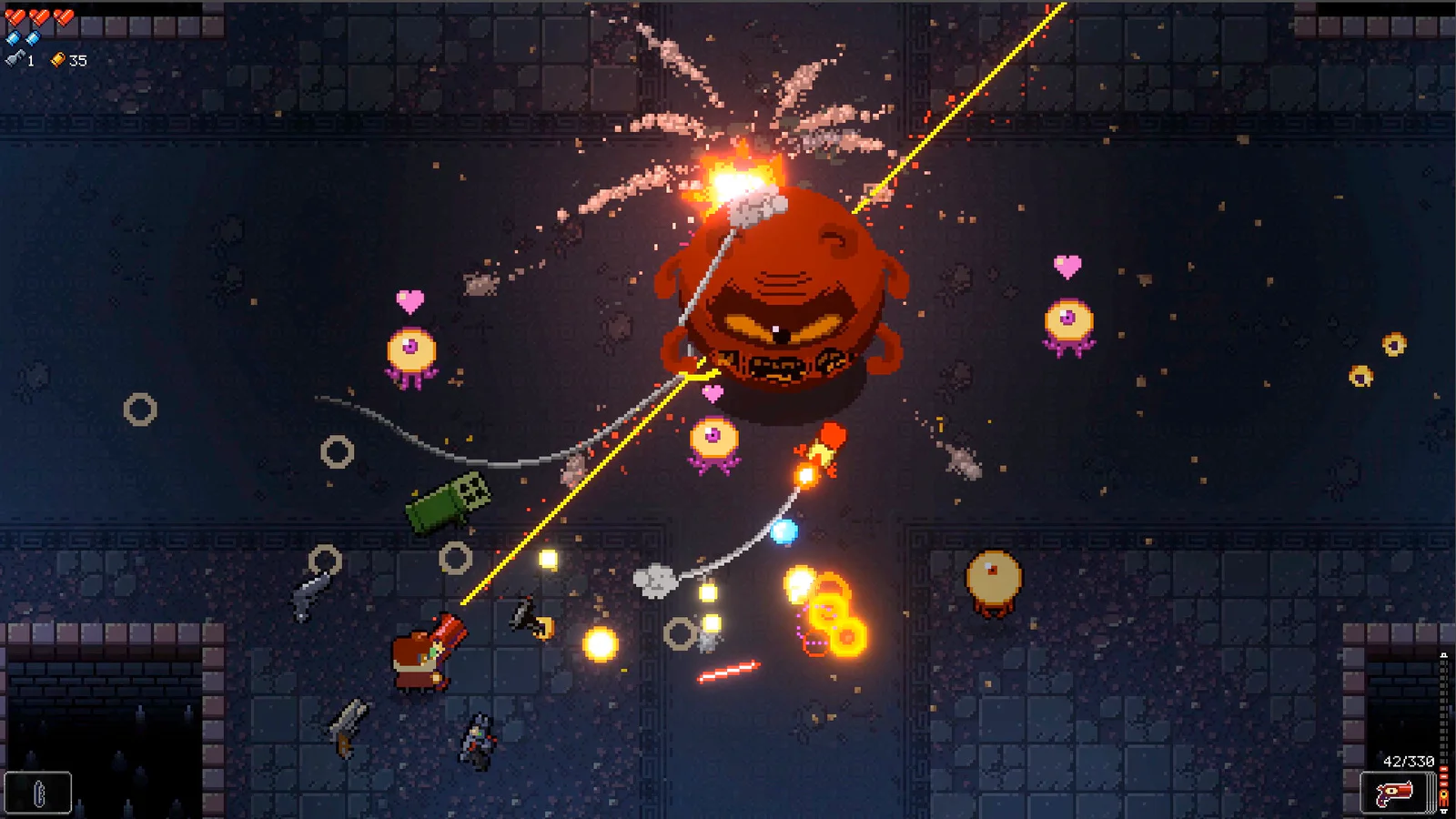
Image: Official gameplay screenshot — Dodge Roll and Devolver Digital
Some games earn their reputation on a single verb. In Enter the Gungeon, that verb is roll. A small studio called Dodge Roll named itself after the mechanic before the game even shipped, which tells you exactly where their priorities sat. Released by Devolver Digital on April 5, 2016, this pun-soaked, bullet-drenched dungeon crawler became one of the defining twin-stick roguelites of the decade, and it did so on the back of tight design rather than a big budget.
Development: four people, a lot of bullets
Dodge Roll formed in 2014 out of the wreckage of Mythic Entertainment, the studio behind Dark Age of Camelot. Several team members walked out just before the company folded, carrying with them years of Unity experience that would prove crucial. Lead designer Dave Crooks pulled the group together: gameplay programmer David Rubel (previously at Google and Lockheed Martin), technical artist Brent Sodman (who had built Hollywood film effects), and artist Joe Harty, a friend of Crooks going back to high school who would eventually draw hundreds of thousands of sprites for the finished game.
It was a tiny operation making an enormous-feeling game. Devolver Digital signed on as publisher, a natural fit given the label’s taste for sharp, strange indie titles with attitude. Crooks handled the name and the lore, spinning a premise where gungeoneers descend into a dungeon to find a gun that can literally kill the past. That kind of high-concept absurdity, treated with total sincerity, became the studio’s signature.
Why it matters: bullet-hell meets the roguelite loop
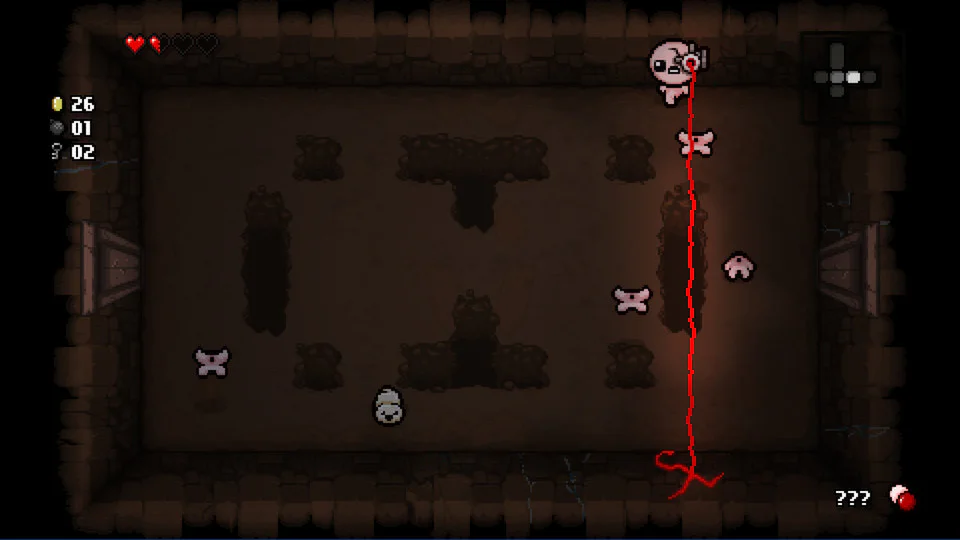
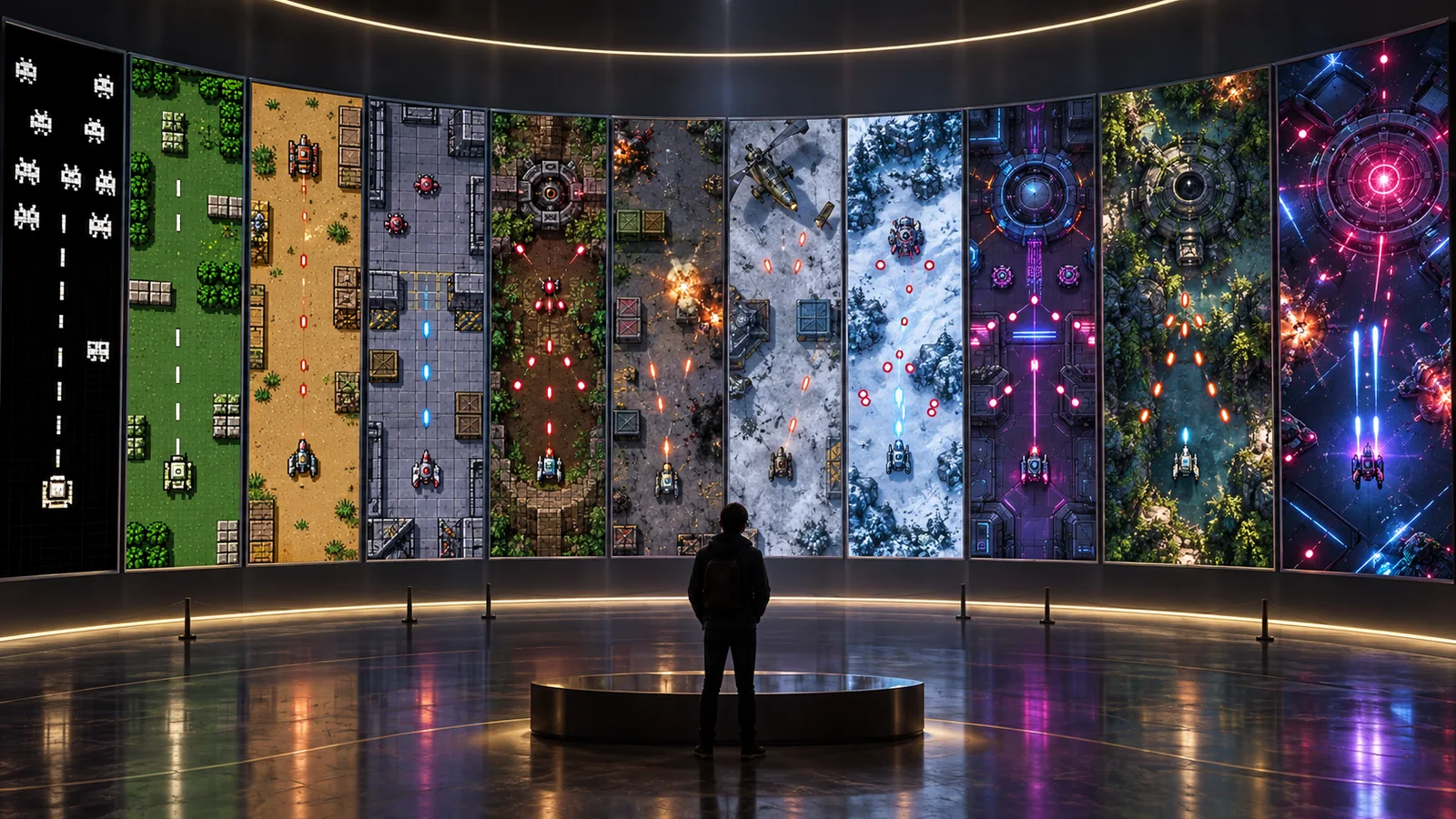
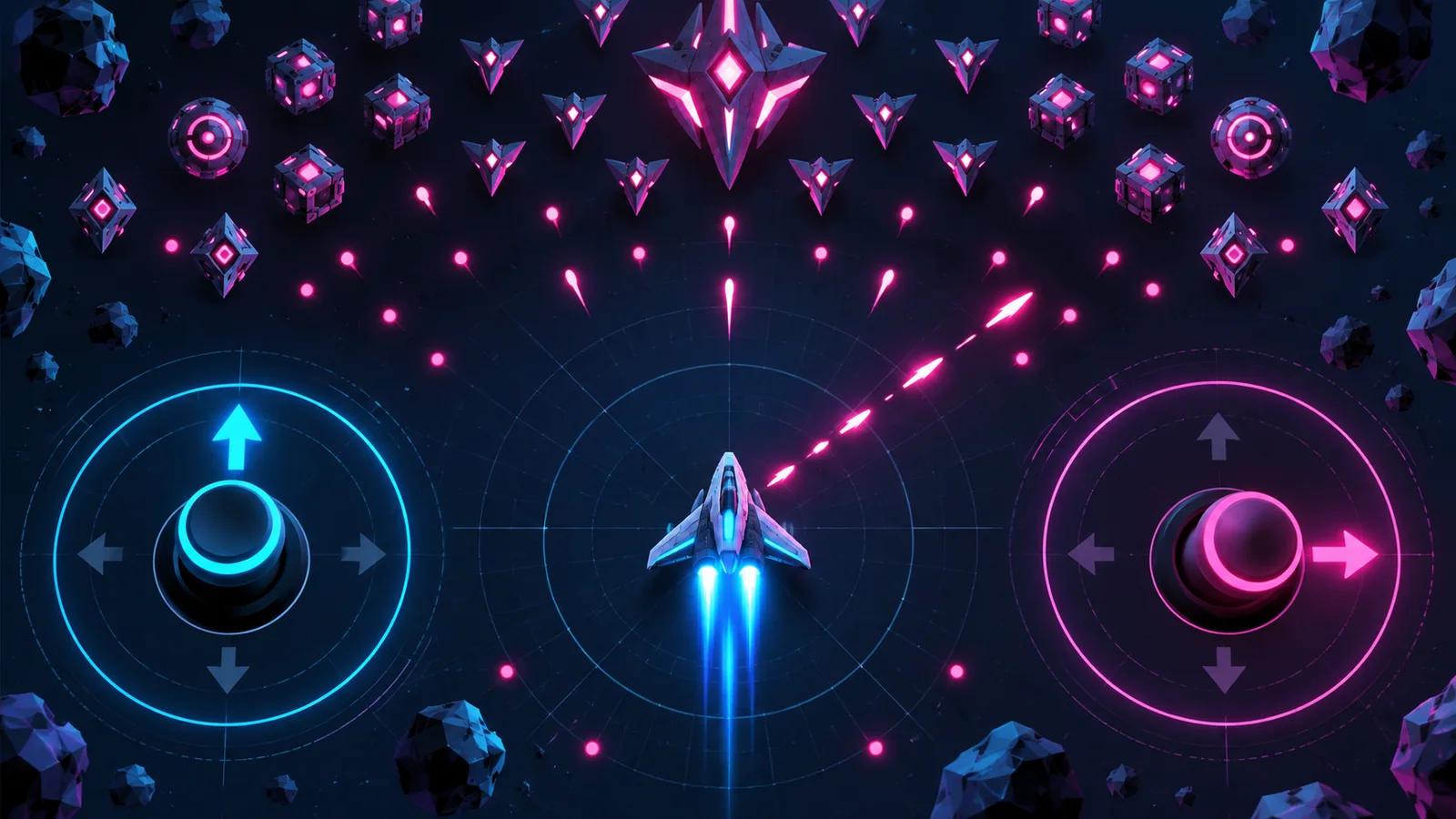
Enter the Gungeon arrived at a moment when the roguelite was ascendant, and it did something clever: it fused the run-based structure of The Binding of Isaac with the reflex-first intensity of a Japanese bullet-hell shooter. You aim with one stick, move with the other, and try not to get clipped by walls of neon projectiles that curl and spiral across handcrafted rooms.
Most twin-stick shooters are about output, about how much you can throw at the screen. Gungeon flips the emphasis toward input reading. Survival hinges on parsing enemy patterns, and the game gives you one great answer: the dodge roll. Read our Top 10 Twin-Stick Shooters of All Time and you will see how rare it is to build an entire identity around a defensive move. Where a game like Assault Android Cactus keeps you constantly firing to stay alive, Gungeon asks you to pick your moments, weave through the gaps, and punish the openings.
How it feels: the roll, the guns, the room
The dodge roll grants a brief window of invulnerability, the classic i-frames borrowed openly from Dark Souls and the shoot-‘em-up Ikaruga. Time it right and a bullet that should have ended your run passes harmlessly through you. Time it wrong and you roll straight into the shot you were trying to avoid. That risk is the whole tension. The move can flip a tables (yes, you can also literally flip tables for cover), slide under enemy fire, and cross the small gaps in bullet spreads that would otherwise be lethal.
Then there are the guns. Gungeon’s arsenal is a comedian’s notebook: a gun that fires bees, a gun that shoots smaller guns, a gun made of a rainbow, a T-shirt cannon, a fishing rod. The variety keeps every run feeling different, because your loadout is a lottery and half the fun is learning what a ridiculous new weapon actually does under pressure. Rooms are cleared one at a time, doors locking until the last enemy drops, which turns each chamber into a self-contained puzzle of positioning and patience.
The difficulty is genuinely steep. Newcomers bounce off it, and that is by design; the reward loop is built on incremental mastery, not on being coddled. It is a game that respects your ability to get better.
Legacy and updates: a studio that kept its word
Dodge Roll supported the game generously. The Supply Drop update landed in January 2017, followed by the substantial Advanced Gungeons and Draguns in July 2018, which rebalanced the experience and added a mountain of content. The send-off came in April 2019 with A Farewell to Arms, a free update introducing new characters like the Paradox and the Gunslinger, plus fresh weapons. Sales tell the rest of the story: over 200,000 copies in the first week, more than 800,000 by January 2017, and past three million by early 2020.
For a comparison of how the roguelite structure shapes replay value, our piece on The Binding of Isaac: Rebirth covers the genre’s other cornerstone, the game Dodge Roll cited as a direct inspiration.
Lesser-known fact: profitable before lunch
Here is one that surprises even fans. In an interview with Gameranx, Dave Crooks revealed that Enter the Gungeon turned a profit within roughly eight hours of launch. For a self-published-feeling indie from a four-person core team, recouping development costs in a single morning is remarkable, and it explains how the studio could afford years of free post-launch support. That same interview notes that co-op was the single feature that introduced the most bugs, requiring months of fixes to tame.
FAQ
Is Enter the Gungeon a twin-stick shooter or a bullet-hell? Both. It uses twin-stick controls (move with one stick, aim with the other) and layers bullet-hell enemy patterns on top, wrapped in a roguelite run structure.
Who made Enter the Gungeon? Dodge Roll, a studio founded in 2014 largely by former Mythic Entertainment staff, with Devolver Digital publishing.
Is the game still being updated? Major development wrapped with the free A Farewell to Arms update in April 2019, though ports have continued to arrive, including mobile versions in 2025.
Sources
- Enter the Gungeon, Wikipedia
- Dodge Roll, Official Enter the Gungeon Wiki
- Enter the Gungeon Interview With Dodge Roll’s Dave Crooks, Gameranx
- Devolver Digital, Official Enter the Gungeon Wiki
enter-the-gungeondodge-rollroguelitebullet-hell