Geometry Wars: Retro Evolved, the Minigame That Rebooted a Genre
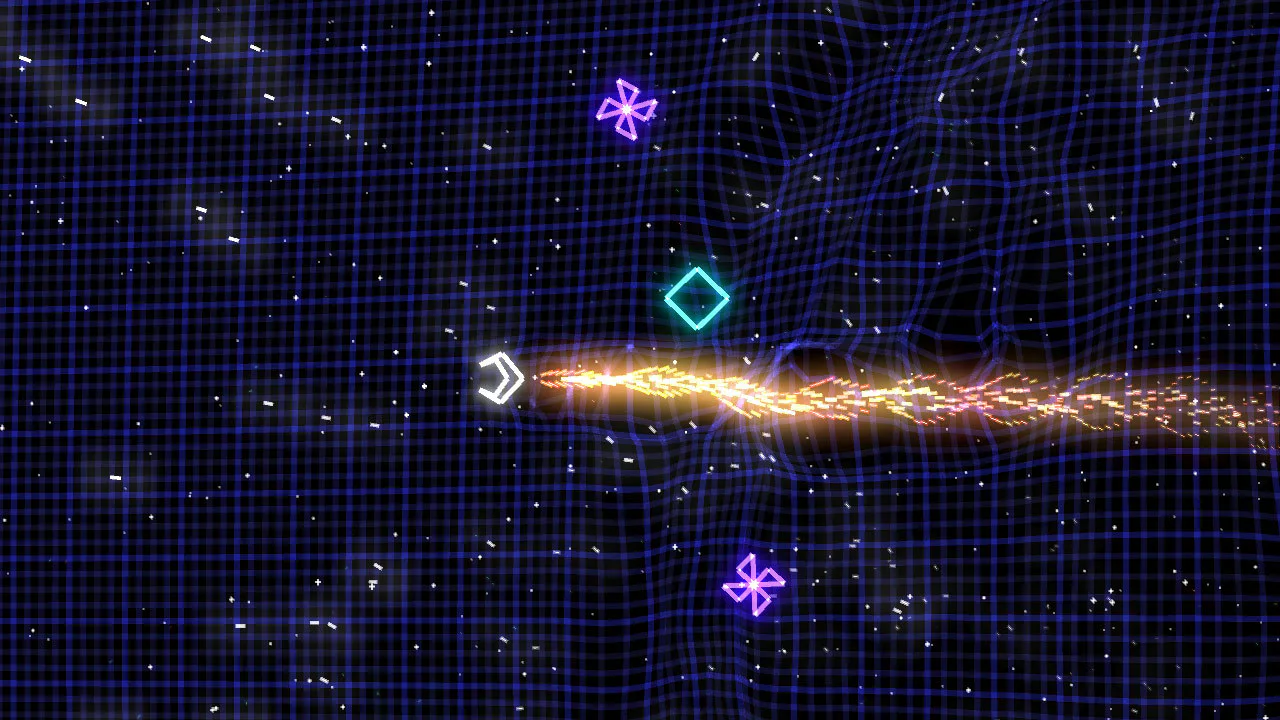
Image: Official gameplay screenshot — Bizarre Creations and Activision
Some games arrive with marketing budgets and cover stars. Geometry Wars arrived as a joke you could load in a racing game’s garage. That it went on to reshape an entire genre is one of the better accidents in modern game history.
Origin: a garage toy that would not sit still
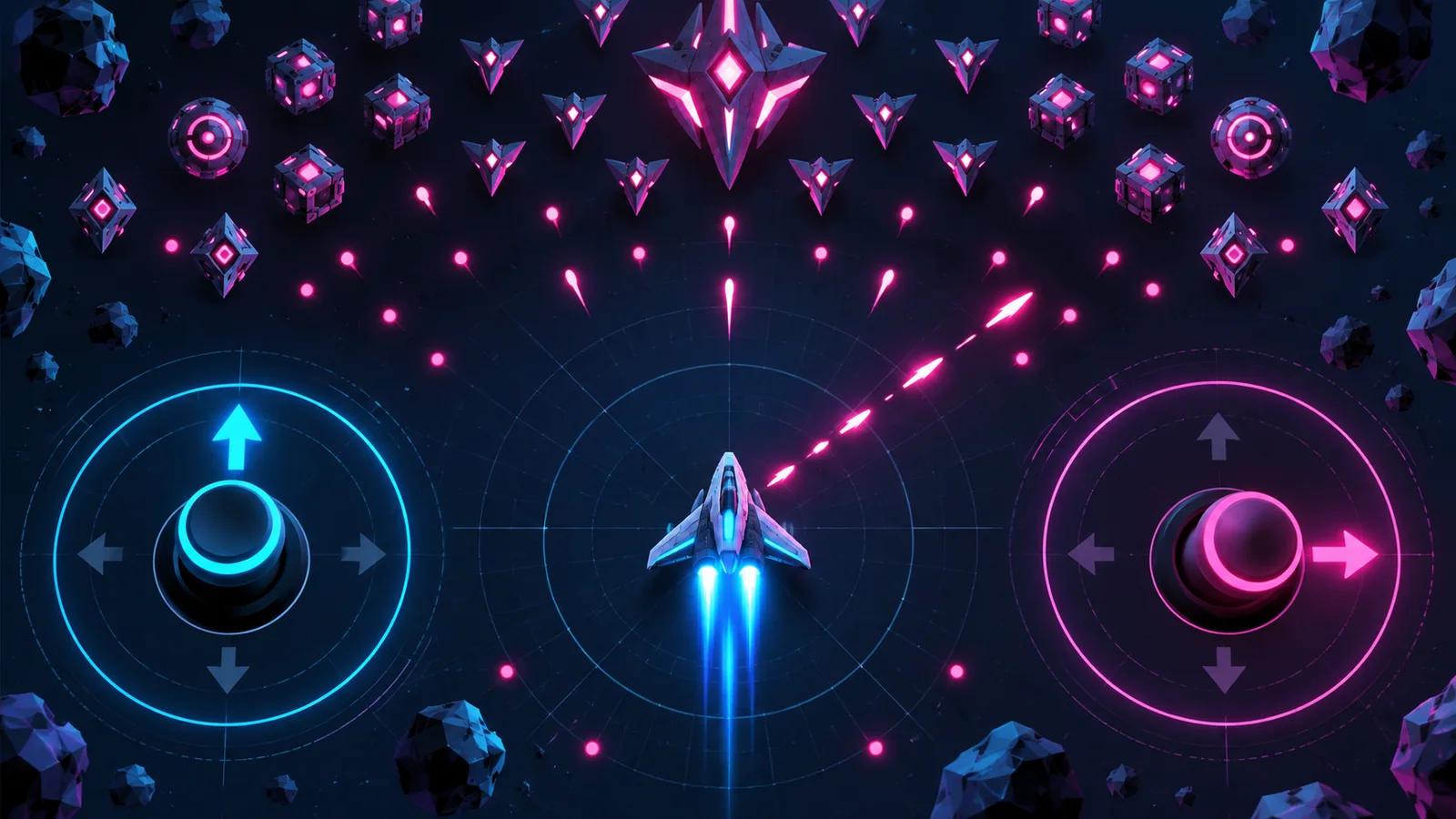
In 2003, the studio Bizarre Creations was deep in development on Project Gotham Racing 2 for the original Xbox. Tucked inside that racer, sitting on an arcade cabinet in the game’s garage, was a small vector shooter called Geometry Wars. It was the work of programmer Stephen Cakebread, and it existed for a very practical reason: the team wanted a quick way to test the Xbox controller’s analog sticks. A neon shooter you steer with one stick and aim with the other is about as pure a stress test as you can build.
Players were not supposed to care about a throwaway minigame. They cared anyway. The cabinet in the PGR2 garage kept pulling people back, and Bizarre noticed. When Microsoft launched the Xbox 360 in November 2005 with its new Xbox Live Arcade storefront, Geometry Wars: Retro Evolved was there on day one, a standalone, prettied-up version of that garage toy, selling for around five dollars.
It became the most downloaded title on Xbox Live Arcade, an outcome nobody had penciled into a business plan. As Cakebread later put it, the whole thing had started for business reasons more than artistic ones (FleshEatingZipper interview). The art snuck up on everyone, including its maker.
Why it matters: the spark for the indie twin-stick revival
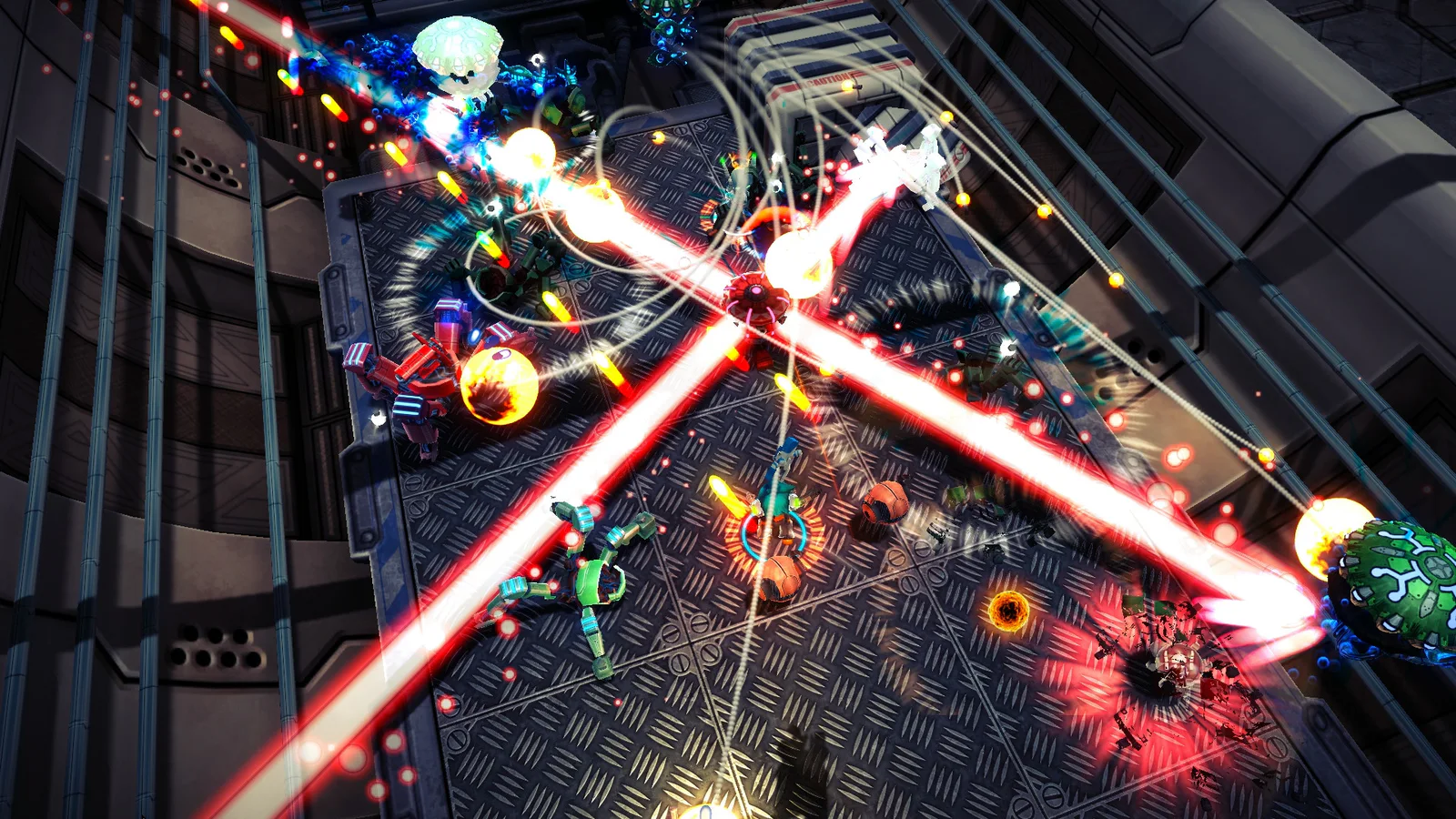
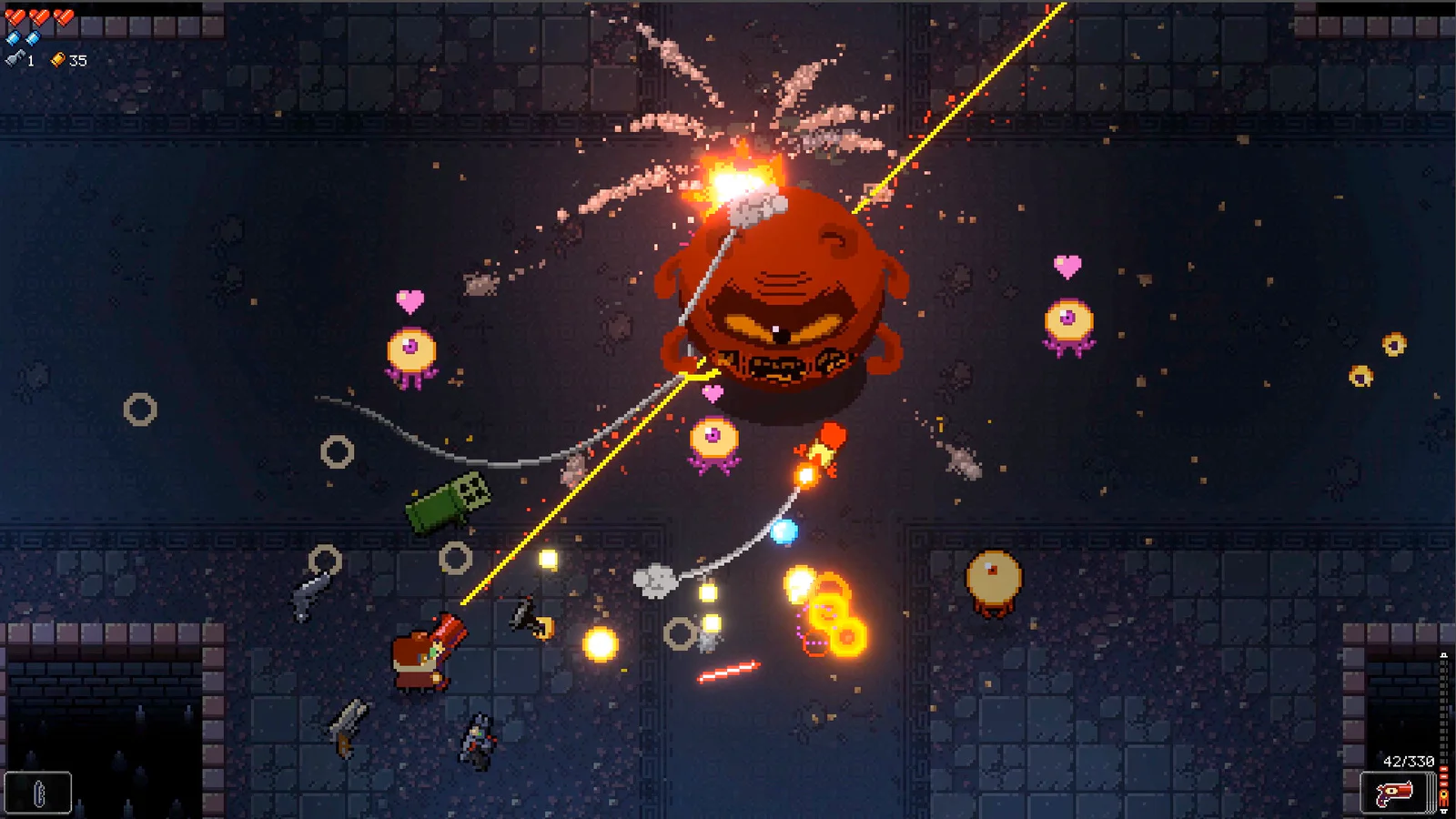
Twin-stick shooting was not new. The lineage runs back to Robotron: 2084 in 1982 and the arcade cabinets that gave you two joysticks and no mercy. What Retro Evolved did was drag that idea into the digital-storefront era and prove it could thrive there.
The timing was everything. Xbox Live Arcade needed a flagship that showed people why they should buy games without a disc, a box, or a trip to a store. Geometry Wars was that flagship. It demonstrated that a tightly focused, cheap, replayable score-chaser could outshine the launch’s big-budget offerings, and it did so under brutal constraints. Bizarre built the whole thing to fit inside the storefront’s strict 50MB size limit. That combination, small download, small price, enormous depth, became the template that a wave of independent developers would copy for the next decade. The score-attack shooter as digital comfort food started here.
How it feels: neon vectors and a rising tide
Play it today and the appeal is immediate. Your ship is a small claw of glowing lines. The left stick moves it, the right stick fires in whatever direction you push, and the whole board is a bright grid pulsing against black. Everything runs at a locked, silky frame rate, with bloom smearing the neon so that explosions bleed light across the arena.
The genius is in the escalation. Enemies do not attack so much as accumulate. Blue diamonds rush your last known position. Green shapes flee and reverse. Purple squares snake across the field. Individually they are trivial; together they become a tightening net. Every 10,000 points nudges your weapon up a tier, so scoring and survival feed each other. You get a handful of bombs to clear the screen when the swarm becomes a wall, and you spend them with the reluctance of someone rationing water. There is no boss, no ending, no story beat to reach. There is only the grid, your reflexes, and the slow, thrilling certainty that you will eventually be overwhelmed. That honesty is why people kept coming back to a garage cabinet in a racing game.
Lesser-known fact: it was a controller test first, a game second
Here is the detail that still surprises people. Geometry Wars did not begin as a game concept at all. It was built, as Wikipedia documents citing Bizarre’s own accounts, “as a way for the team at Bizarre Creations to test out the Xbox controller” during Project Gotham Racing 2’s development (Wikipedia). In other words, one of the most influential shooters of its generation started life as engineering scaffolding, a diagnostic tool that happened to be fun. The team kept it in the shipping racer almost as a curiosity. Players decided it deserved a career of its own.
Legacy: the family tree it grew
Retro Evolved spawned a franchise: Geometry Wars: Galaxies, the acclaimed Retro Evolved 2 in 2008, and Geometry Wars 3: Dimensions in 2014. More important than the sequels is the influence. The clean vector look, the particle-drenched chaos, and the pure score loop echo through countless independent shooters that followed. When Housemarque built the ferocious Nex Machina years later, it was working in a tradition Retro Evolved had helped modernize and popularize.
Bizarre Creations itself did not survive the decade, closing in 2011 after its acquisition by Activision. But the little shooter from the PGR2 garage outlived the studio, and its DNA is all over the genre. For the full picture of where it sits, see our Top 10 Twin-Stick Shooters of All Time.
FAQ
Was Geometry Wars really inside another game first? Yes. It debuted as a playable minigame in Project Gotham Racing 2 (2003) before its standalone Xbox Live Arcade release in 2005.
Who made it? Programmer Stephen Cakebread designed it at Bizarre Creations, with series audio by Chris Chudley of Audioantics. See his MobyGames profile.
Do I need a special controller? No, but a gamepad with two analog sticks is essential. The PC version was widely criticized precisely because mouse-and-keyboard does not suit the twin-stick design.
Sources
- Geometry Wars: Retro Evolved, Wikipedia
- Bizarre Creations, Wikipedia
- Stephen Cakebread, MobyGames
- The Father of Geometry Wars Speaks: Stephen Cakebread interview, FleshEatingZipper
geometry-warsbizarre-creationsxbox-live-arcadeindie